Saturday, 22 June 2019

SATURDAY SESSIONS # 4


Welcome to SATURDAY SESSIONS # 4, featuring The Compromise, a story about healing through past-life regression.
Jordan finds himself in the lost continent of Lemuria, where a  peaceful, exotic and highly-advanced civilisation is said to have flourished some 50,000 years ago.
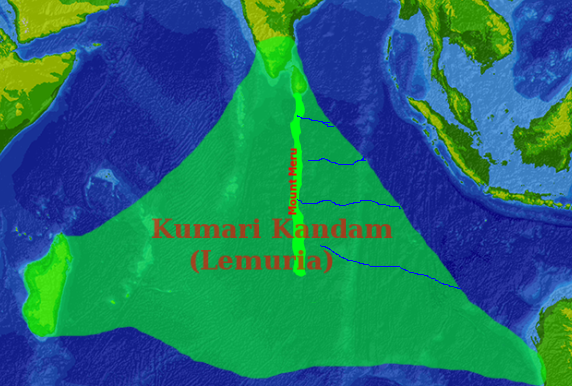


CC BY-SA 3.0, https://commons.wikimedia.org/w/index.php?curid=1889920

# 4

My hiking shoes were really snug. I was wearing a onesie.  Blue, light and comfortable.  Cotton, I think, open neck, perfect for this climate. There was a logo embossed on my breast-pocket which looked like a microscope with some indecipherable lettering beneath it. Where am I?  Huh, must have dozed off. Didn't realise I was so tired.                                                                                                        
I had slipped away from my group and our guide at the hotel and switched off my phone. From the looks I was getting, I knew that I was out-of-bounds and unwelcome. I sat on a circular street bench. Everything was curvy or circular in this city. Multi-coloured  birds hopped about at my feet and one even landed on my lap and started to sing. I felt such a thrill to be trusted by the bird and even serenaded with such gusto!
  
                              Painted Bunting Colorful Birds                                                                                                                      
People's bodies looked supple and lithe, like dancers. I observed the gentle couples nonchalantly strolling by. They wore comfortable, loose clothing with amazing colour combinations that seemed to shift in front of my very eyes. They were all quite tall and their skin was white, very white, unlike mine, unlike anybody I'd ever met back home. Many of them had ginger-coloured hair which they all wore long, women and men.  Big, brown, almond-shaped eyes with large eyebrows and long eyelids seemed to be a common feature of these graceful people who radiated a sense of peace and stillness. I'd heard from a colleague, who had been here once, that the absence of stress was the reason why there was no chronic illness of any kind in Lemuria. At least, that's the official version, he laughed,  and joked about secret underground hospitals and Lemurian propaganda. The guide had told us on the flight that the first thing we'd notice was the peace and quiet here. No traffic. And of course, the Lemurians don't speak.                                                                                                                                
I'm a PhD graduate in Chemistry working for the Quality Standards Authority which oversees the regulation of Health & Safety standards at all the laboratories and research centres, companies and institutions, across the continent. Two thousand one hundred and seven employees turn up for work at the same high-rise building every morning.  I head up a team of one hundred and forty-nine people on floors fifty-seven and fifty-eight of the building. After five years' work at the QSA, where I was an employee with the Division responsible for overseeing quality standards in the arms industry, group leaders like me are offered a bonus trip to Lemuria. The promotion from being an employee at the Defence Division to unit manager at Health came as a bit of a surprise, I have to admit. Although I'm sure it had to do with a recommendation I'd submitted two years ago on a nerve agent which eventually led to a faster, more efficient and cost-effective deployment of a certain chemical weapon in the theatre of war. It's a colourless, odourless, organophosphorus compound which causes paralysis leading to suffocation within a maximum period of less than five minutes, significantly more effective and humane than the original product which had been sent to us for approval.  I even got an award, as it quite rare for an employee at the QSA regulatory body to revert to the manufacturers and submit his own suggestions for improvement. At the award ceremony, to the great amusement of all present, the product was officially nick-named The Flyspray, as two of the active ingredients in my submission, tetramethrin and d-phenothrin, are commonly used in pesticides which inhibit the enzyme acetylcholinesterase, block the nerve impulses and rapidly precipitate muscular paralysis and suffocation.                                                                            

They had briefed us a bit on what they knew about Lemuria and though the  tour was meant to be a perk, it was an open secret that the purpose of the trip was really meant to be a fact-finding mission based on the hope that we'd return with some new insights or innovations.  Field trips to this continent for research purposes are notoriously difficult,  as there is little or no access to anything of real interest to us and our society back home. The fact that everything  in this place is so different makes it at once fascinating, but at the same time impossible, to compare or line up with our own specific needs and requirements back home.                                                                    

Regular tourists are not welcome here. That's why I couldn't bring Croescia with me, or Jarok, our ten-year-old child.  But most tourists wouldn't  be interested in Lemuria anyway.  For example, they don't use money here. There are no shops, no bars, no restaurants.  As you know, tourists like to spend money, otherwise they don't feel it's a real holiday.  I mean, why would they work themselves to the bone throughout the year to save a bit of money if they couldn't splash out once in a while on a holiday?  To go to a place with no drink available, of course, would be unthinkable.  As for shopping, well, I'm not into shopping myself but Croescia and Jarok love it. So for them, Lemuria would be struck off the list. Where's the fun wandering around a city, they might ask, if they can't spend their money in the shops?  Although now that I think of it, where's the fun in that?  Did I love shopping when I was Jarok's age?  Maybe.  But for as long as I can remember, I could never quite get the rationale behind the love of shopping.  Women, in particular, I only once met a woman who didn't love shopping.  It must be the excitement of trying on that dress or fitting on those shoes followed by the excitement of looking forward to actually wearing the stuff later. And of course, owning it. But where's the fun in that?  Maybe I need to get out more. Or maybe I'm more Lemurian than I think!                                

(Continued next Saturday!)

www.gregoryrosenstock.com

If you missed the first three chunks, you can catch up here:

http://gregoryrosenstock.blogspot.com/

Sunday, 16 June 2019

BLOOMSDAY

BLOOMSDAY, 16th June 


James Joyce


Joyce wrote only a handful of books and they're all amazing! Here's the ending (4 mins.) of his short story, The Dead (with the late, great Donal McCann, featuring Angelica Huston and directed by her father, John):       end of The Dead    

But why is Joyce world famous?
         ULYSSES. That's why. It's a mock-heroic title - the book being a parody of Homer's Odyssey - referring to his main character, Leopold Bloom, whose heroic job is selling advertising space for a local newspaper as he wanders around the streets of Dublin.
         In Eccles St., inner city Dublin, Bloom gets up in the morning, feeds the cat, gives his wife, Molly, a cup of tea in bed and has his breakfast of fried kidneys before he goes off to work. At around the same time, Stephen, a young schoolteacher, gets out of bed at his accommodation in the bleak Martello Tower in Dun Laoghaire, Dublin. (Today, it's the Joyce Museum).  
         The year is 1904, June 16th. The huge novel is about a single day in the life of Bloom and other Dubliners. Eighteen hours, eighteen chapters, each with a different style. Each chapter also relates to a part of the human body and, of course, to an episode in Homer's great Odyssey. There is no real plot and not much happens. In fact, it's very ordinary.
         
Every year, on 16th June, Dubliners celebrate what they call Bloomsday. Actors and fans dress up in the elegant clothes that were worn in Dublin over a hundred years ago and with their admiring public, go through the activities that take place in ULYSSES, e.g. they start the day with the same breakfast as Bloom L and perform extracts from his works in Dun Laoghaire and all over Dublin throughout the day.
         ULYSSES is about ordinary people doing ordinary things on an ordinary summer's day in Dublin.

        But it is also extraordinary. Because of his ability to use language so well, Joyce brings these characters to life in a way that had never been done before. We suddenly find ourselves entering the constant flow of thoughts, not only in the main characters, but in other figures as well. The reader has to be very alert because we never know when the perspective is about to shift from one person doing something, to another person doing - or thinking! - something else. (This flowing technique is known as the 'stream of consciousness'. ) 
       
  It is also a very human novel; there is no violence in it and each moment is ordinary and beautiful in its ordinariness.
         Joyce used a very large canvas to include all the ordinary details of everyday life and in doing so, made them extraordinary.
Photo of Ulysses Commemorative Plaques - Dublin, Republic of Ireland
         Today, when you walk through Dublin, you will see plaques in the footpaths marking the spots where Bloom was, the shops and pubs he went into, and the extract from ULYSSES which refers to that moment.  

In the last chapter of the book, we see Bloom at about 2 a.m. getting into bed with Molly after his 'Odyssey' in Dublin. He sleeps on the other end of the bed because he knows Molly is unfaithful. He knows that she had seen another man that afternoon - in that very bed!  But he loves her, nevertheless. Then he falls asleep.

         Then, Molly starts thinking - she goes off on her own little mental Odyssey - about her day and her past and her life in general. Her last thoughts are loving memories about herself and Bloom when they were younger.
         So for the next sixty pages she thinks - six very, very long sentences with no punctuation whatsoever until the very last full-stop!
         Here are the last fifty lines on film!  https://youtu.be/ii_aZ6djNkM


Saturday, 15 June 2019


Welcome to SATURDAY SESSIONS # 3, featuring The Compromise. A patient undergoes hypnosis, returns to a past life and gets more than he bargained for! If you missed the first two pieces, it's about a guy whose life just keeps getting worse; he now attempts self-healing through past-life regression therapy. 


# 3


I stop suddenly to listen to the strains of the melancholic song. In a flash, I break into an uncontrollable fit of howling as I fall to my knees on the rug. In a vain effort to compose myself and behave like an adult, I apologise profusely to Lucy who is now clasping both of my trembling fists and trying to ease me gently back into the armchair. I try to rationalise it and tell her that I'm suffering from exhaustion, deciding in my own mind that it isn't an appropriate moment to start talking about my broken life and my cancer; I'm sure she hears more than enough of the misery of people's lives in her line of work. No, better not mention the death-sentence.
But the track, I ask her, the song, what was it? What is it? How could a song have such an overwhelming effect on me?
She fetches the CD jacket and shows it to me. Track seven, she says. It's a collection of songs, meditations and tunes from India. This one is in English, Long Time Sun, sung by Snatam Kaur, a love song, lullaby, even.
Lucy invites me to take my shoes off and lie down on the sofa. She briefly massages my aching shoulders. So much better now. You can rest here, she whispers, like a mother. You can listen to the song once again, if you like, before you're ready to leave. I thank her and ask her if she wouldn't mind continuing with the session another little bit, the hypnosis, the regression, just for a few minutes, just one last time, while the song is playing.
She selects track seven on the CD and plays it. I try to focus on the words of the lyrics, May the long time sun shine upon you while Lucy tells me to breathe deeply through my nose, up through the back of my lungs, holding for a while, and then out again, a long, long outbreath out... all love surround you...
I'm thinking of the man in the wheelchair, I'm thinking of Cathy, of Jason, of Maria. I feel so responsible for them all, responsible for whatever it is they are suffering in their lives. Why do I feel sorry for the man in the wheelchair? May the pure light... within you...guide you on your way...
Lucy's hypnotherapy has got to the bit about the stream of light, the golden stream of warm light which now spills down into my body, a warm shower of light, cascading downwards in slow motion, down through my head, my neck, and down, all the way down through my torso, my limbs and my toes, lifting me, suspending me...
Look around you, she is saying, what do you see?
I'm as light as a leaf.
What are you wearing? Look at your feet.
I'm falling.
Drifting.


(Continued next Saturday! You'll never believe where he ends up!)

Here's that song, by the way...


P.S. One of my other books, LAZARUS, is the extraordinary tale of a man who raises his son from the dead - but at a cost. It's published by Smashwords as an e-book. If you'd like a free copy, just pop me an e-mail and I'll be happy to send it to you!

Greg